
After seasons of jury panels and score sheets, clear patterns separate winning projects from the rest. Five habits any team can start practising today.
On this page
Jury members see hundreds of projects every season. The ones that end up on stage are rarely the luckiest — they are the ones built with a few deliberate habits. Here are five that show up again and again in winning submissions.
1. Solve a real problem, narrowly
Winning projects almost never try to fix everything. They pick one specific, verifiable pain point and solve it end to end. "An app for students" loses to "an app that cuts equipment-booking queues at our lab by half" every single time.
2. Show the work, not just the result
Juries score evidence. Document your process — sketches, failed prototypes, test data — in your project write-up and video. A team that shows three honest iterations reads as stronger than one that only shows a polished final demo.
3. Treat the video like a pitch, not a tour
Your video presentation is the closest a jury gets to meeting you. Lead with the problem, demonstrate the solution working, and end with impact. Sixty focused seconds beat five wandering minutes.
Quick video checklist
- Problem statement in the first ten seconds.
- The solution running live — not just slides.
- One clear sentence on what is next.
4. Quantify everything you can
"Users liked it" is not evidence. "Fifteen users completed the task 40% faster" is. Even small, honest measurements put your project in a different tier.
5. Finish the boring parts
Complete forms, readable abstracts, working links, an uploaded thumbnail that crops cleanly. Juries notice administrative sloppiness, and it colours how they read the work itself. Winners are tidy.
The projects that win are the ones a jury can understand, verify and remember — in that order.
Ready to put these habits to the test? Browse upcoming competitions on PENTAS and register your team — your next award starts with an entry.
Comments
Leave a comment
No comments yet — be the first to share your thoughts.
Comments are reviewed by our team before they appear on this page.
Keep reading
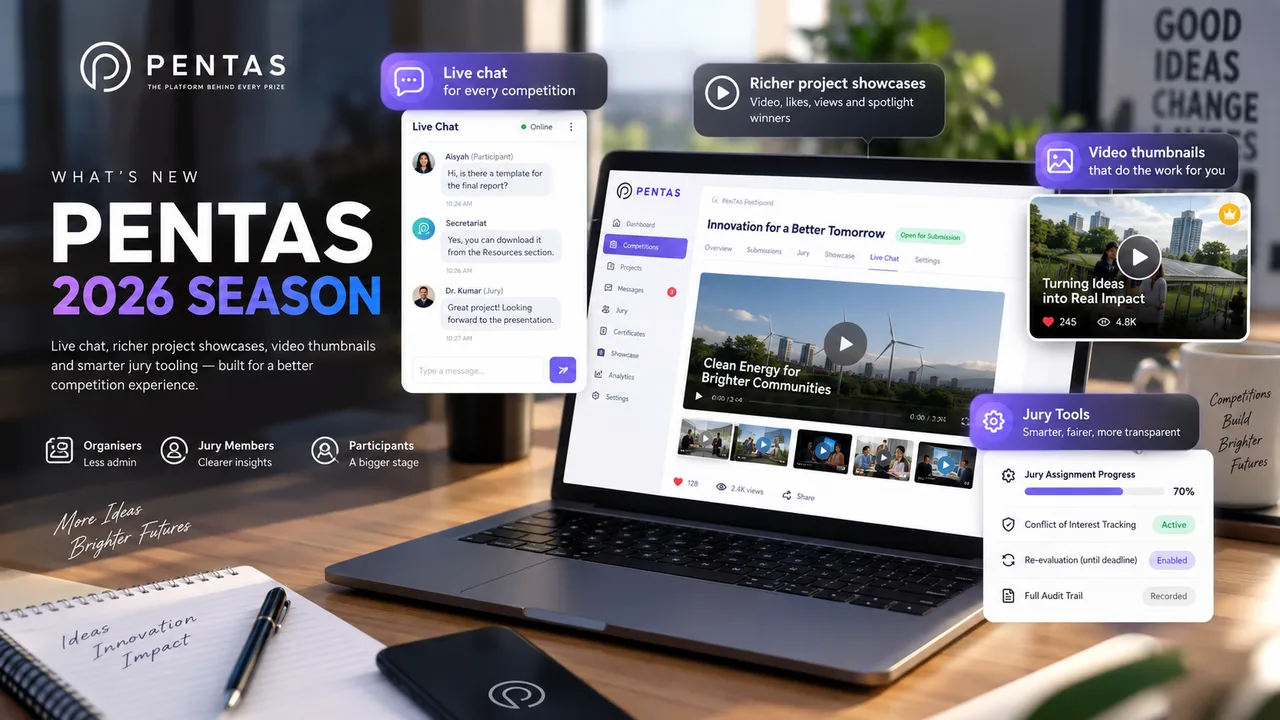
What's New on PENTAS for the 2026 Competition Season
Live chat, richer project showcases, video thumbnails and smarter jury tooling — a quick tour of everything that landed on PENTAS heading into the 2026 season.
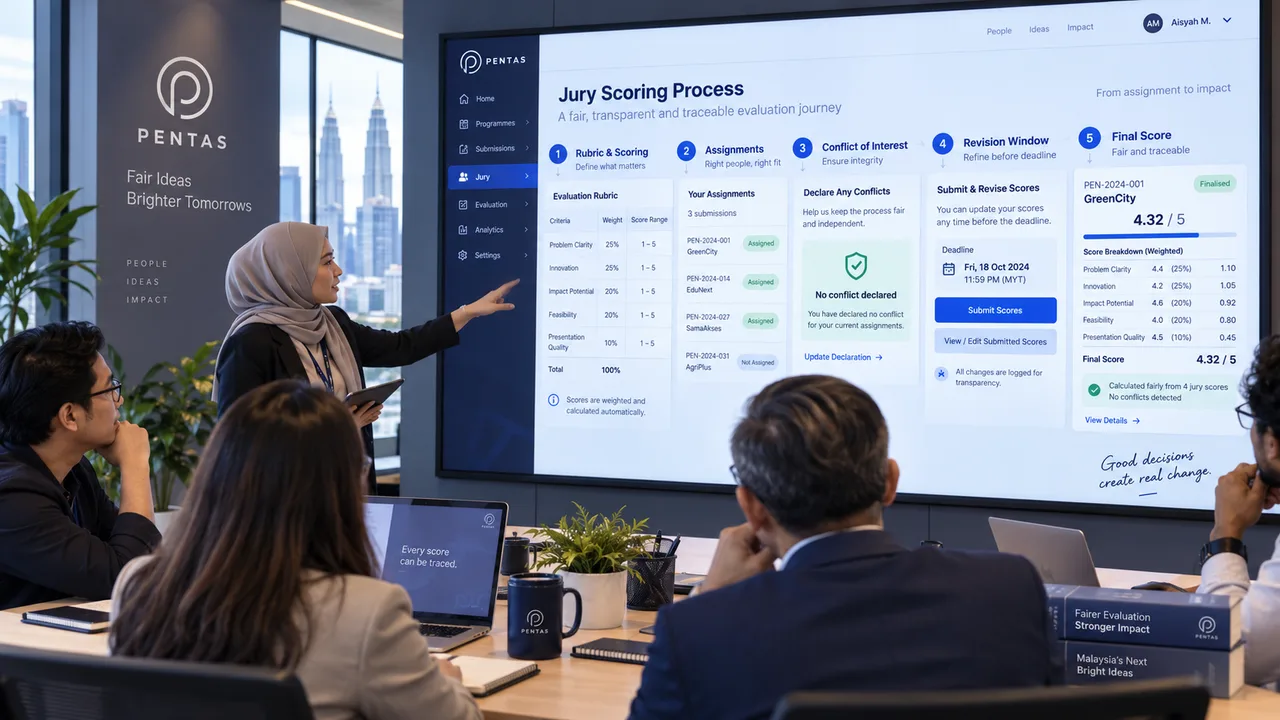
How Jury Scoring Works on PENTAS: From Assignment to Final Score
Ever wondered how a project goes from "assigned" to "scored"? A look at the evaluation pipeline: rubrics, assignments, conflicts, and how final scores are computed.
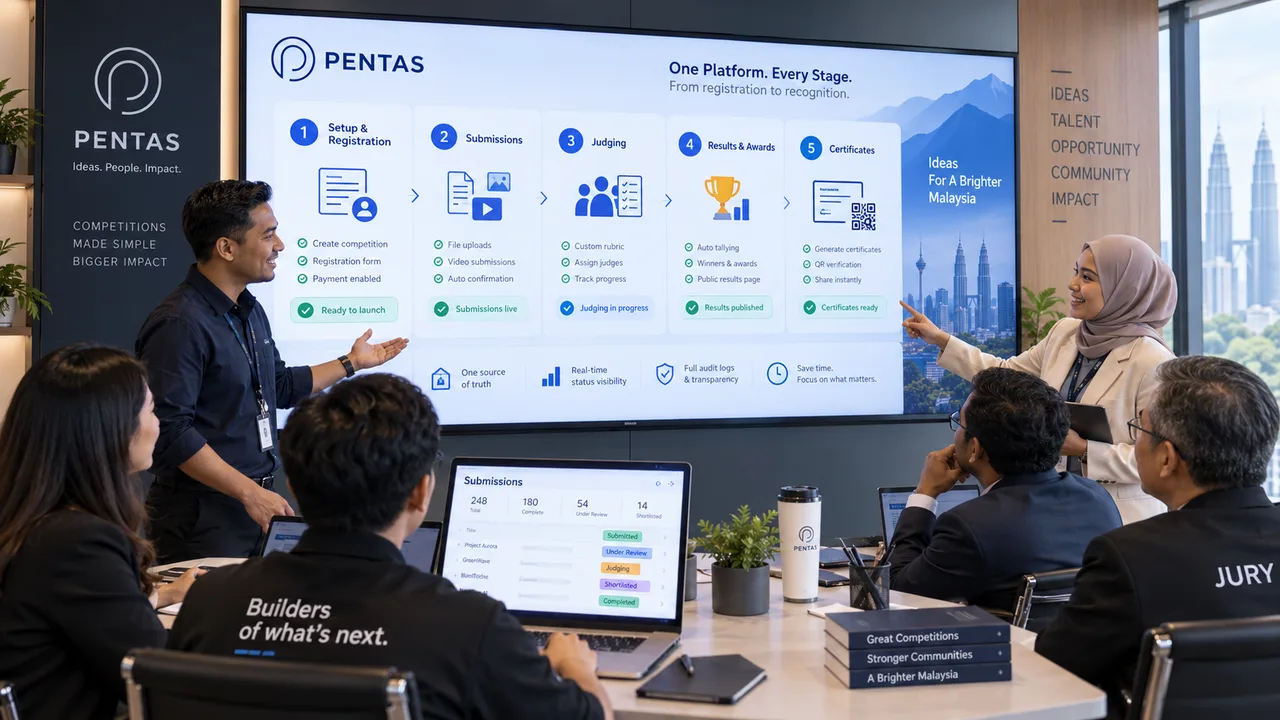
From Registration to Certificates: The PENTAS Competition Lifecycle
Registration, payments, submissions, judging, awards, certificates — how PENTAS carries a competition through every stage without a single spreadsheet.